
Level Ground for Outdoor Living
Patios in San Augustine for creating dedicated outdoor space at ground level for dining, gathering, and everyday use
Patios create usable outdoor areas that extend living space beyond interior rooms and provide stable, level surfaces for furniture, grills, and foot traffic without requiring stairs or elevated structures. S.W. Construction plans and builds patios throughout San Augustine and surrounding communities, addressing placement relative to home entrances, sun and shade patterns, drainage requirements, and how new paved areas will connect to existing landscaping and yard features. This service matters for homeowners whose yards lack flat, dry areas for outdoor activities, whose back doors open to muddy or uneven ground, or who want dedicated space for entertaining without building elevated decks.
Patio planning begins with evaluating site grades, soil drainage characteristics, and how water currently moves across the yard during rain events. Proper construction requires establishing a stable base that won't settle unevenly, grading surfaces to shed water away from the house foundation, and determining dimensions based on intended furniture arrangements and traffic flow. East Texas heat and rainfall mean that material selection and drainage details directly affect how long surfaces remain level and usable without cracking, sinking, or becoming slippery when wet.
Contact our team to discuss your property layout, intended patio use, and project scope requirements.
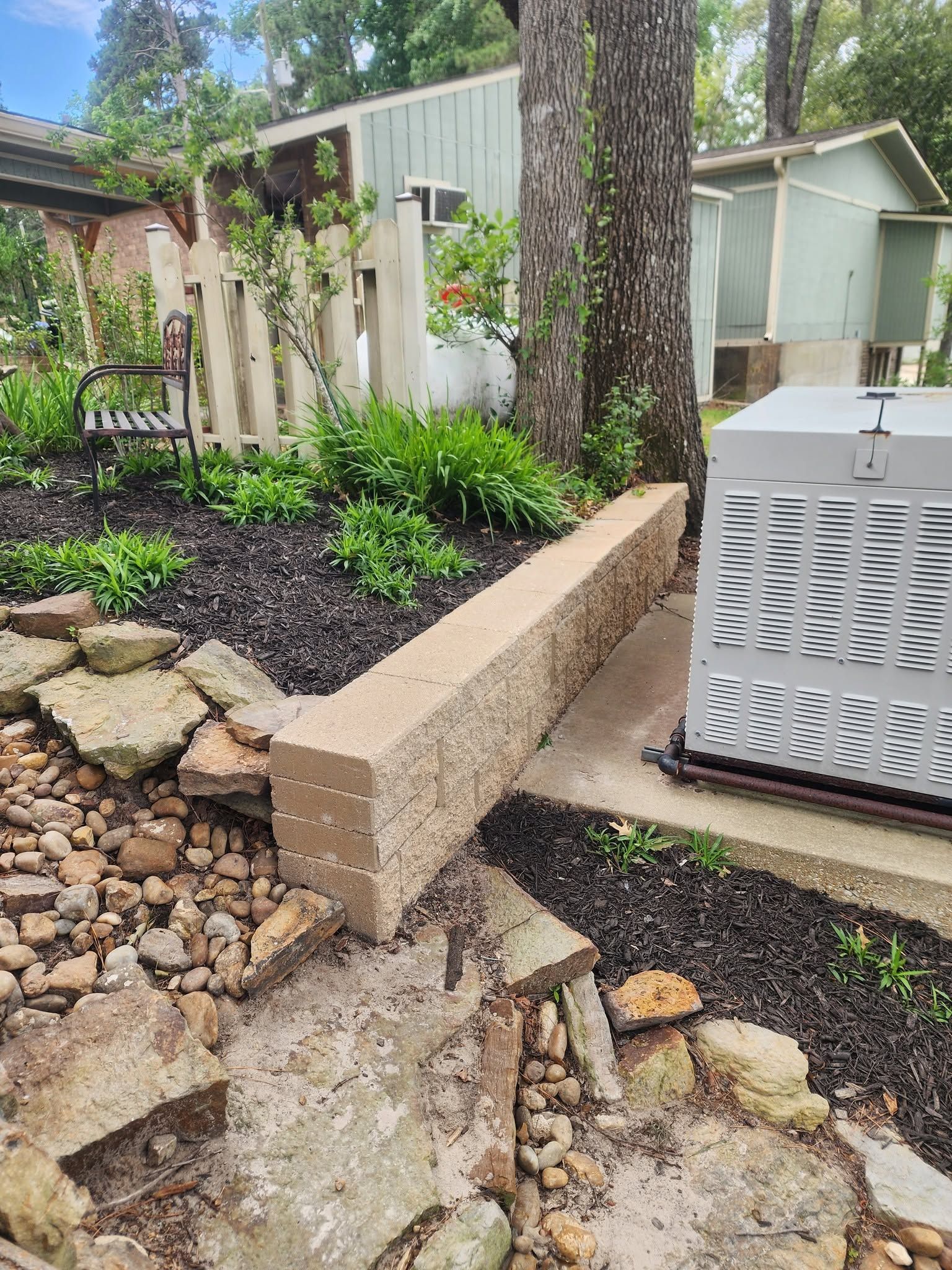
Construction starts with excavating to remove topsoil and organic material that compresses over time, then installing base layers that provide drainage and structural support beneath finished surfaces. Grading establishes positive slope away from the house so that rainfall doesn't pool or run toward the foundation. Edge restraints contain base and surface materials, preventing lateral spreading that causes settling and surface cracking. Compaction at each layer ensures that the patio remains level as the ground beneath it undergoes seasonal moisture changes and freeze-thaw cycles.
Once completed, you gain outdoor space that remains dry and accessible even after heavy rain, supports furniture and foot traffic without wobbling or sinking, and connects logically to doors, walkways, and yard areas without awkward transitions. The surface stays level for the long term because the base was properly compacted and graded, and water drains away quickly instead of pooling in low spots or running toward the house. You can set up outdoor dining and seating arrangements that remain stable and functional throughout the year rather than requiring constant adjustment or being unusable during wet periods.
Patio construction includes site preparation, base installation, grading for drainage, and finished surface installation. It does not automatically include decorative borders, lighting, irrigation adjustments, or landscaping changes beyond what's necessary to integrate the new paved area with existing yard features and drainage patterns.
Questions About Planning and Building Patios
Homeowners considering patio projects want to understand how placement, size, and construction details affect function, maintenance, and long-term performance in local soil and weather conditions.
What site evaluation determines patio placement?
Assessment includes reviewing grade slopes, identifying where water currently drains, locating underground utilities, measuring clearances to property lines, and determining sun exposure and shade patterns throughout the day.
How does proper base preparation prevent future settling?
Excavation removes unstable organic soils, compacted base layers provide load distribution and drainage capacity, and grading directs water away from the patio perimeter so that underlying soils don't become saturated and compress unevenly.
What factors affect patio size and shape?
Dimensions are determined by intended furniture layouts, traffic paths between doors and yard areas, and how the patio will connect to decks, walkways, or other outdoor features without creating awkward transitions or unusable narrow sections.
When is the best time to build a patio in San Augustine?
Construction is easier when soils are dry enough to compact properly and rain doesn't delay base preparation, though scheduling depends more on contractor availability and how quickly homeowners need the outdoor space functional.
What maintenance does a new patio require?
Routine cleaning removes leaves and debris, periodic inspections identify areas where edge restraints have shifted or surfaces have settled, and prompt repairs prevent minor issues from expanding into larger drainage or stability problems.
S.W. Construction builds patios that provide reliable outdoor space for East Texas homeowners year-round. Arrange a site visit to evaluate your yard conditions, discuss how you plan to use the patio, and develop a construction plan that fits your property and budget.